Friday, August 16, 2019

Review: Ghost Wall by Sarah Moss

A novella is best defined as, or described to be, a short book. In my opinion, the best novellas don't read like long short stories or quick novels. Rather, the ones I find myself coming back to are written with such precision and enthusiasm that between the world building and the plot you find yourself forgetting each of those aren't themselves characters when suddenly it's over. A novella makes me want more, but I don't feel shortchanged when it's done right.

Sarah Moss's Ghost Wall is a novella that tells the bone-chilling tale of a teenage girl and her mother trapped on what can most poorly be described as the worst camping trip ever. You see, Silvie's dad has some very firmly held beliefs with regard to his wife and daughter's place, and less regard for them than his fascination with ancient Brits. Dark things happen in the woods, and Silvie may very well have to fight through these terrors if she hopes to come out of this family vacation alive.

I don’t know a better word to describe the crafting of this wonderful novella than “beautiful.” This horrifying and brief flurry of pages is brilliantly paced. Ghost Wall's every detail and moment drives towards inevitable violence with a precision and a tone each fully capable of sending chills down the spine of any psychological horror enthusiast (or casual reader!) The story asks several very exacting questions of its readers, but ultimately we are made to wonder: what is man’s violence and how willingly does it separate its victims (women & children) from time and place? This is a traumatic and carefully written piece of fiction that I know I’ll be revisiting more than once.

- Frank

More But I'd Rather Be Reading! here.

Sunday, August 11, 2019

Review: The Book of the Long Sun: Lake of the Long Sun by Gene Wolfe


Lake of the Long Sun continues Patera Silk's quest to recover his manteion (church) from the clutches of an aristocratic crime-lord. Along the way, he'll somehow get through an exorcism that quickly turns into a pulp murder mystery, complain a lot about walking in the heat of the day, and make a dramatic run through a series of tunnels that reveal his world is a generational starship (really, this is a throw-in-the-towel word on the back cover synopsis, and I don't want you to think knowing that will ruin your ability to read this book and be just as awed and inspired by Wolfe's command of narrative as you should be.) There's a lot more standard science fiction fare in Lake of the Long Sun than there was in the first novel, but that's just the fun!

The bulk of this novel is world-building. Wolfe wants you to feel what Silk can not possibly understand: this place is a massive man-made vehicle to preserve life en route to another planet, but it's been in operation for an unknown space of time and, between the people surviving in the Short Sun whorl and the machinery and operations of the ship breaking down and being salvaged by unwitting survivors, it's not looking like it'll be a place anyone can survive on for much longer. Does Silk realize this? No, not yet, and never as such. But then, he's just beginning to learn that the lust and overall corruption of mankind is never simply the fault of someone who sins. (Yes, these novels are thematically steeped in the spiritual teachings of Christ.) Can Silk learn that his love for people and his hope for them to improve and live better lives means more than simply adhering to the rules and living with his nose to the ground all while cyborgs try to kill him for stumbling into government conspiracies to trap mankind on a dying ship in space simply to indulge their own desires to be immortal gods?

In my previous review of the first book of the series, I wanted to make clear that Gene Wolfe is never a casual read and I'm trying to sort out the mysteries of this tetralogy while enjoying his mastery of prose and command of narrative. Mr. Wolfe was a very dense and intricate writer who was extremely fond of using archaic words and unreliable narrators, as well as cliffhangers, to challenge his readers to look for the story they wanted to read in his work. It's still difficult, even after this re-read, to explain what's so brilliant about Lake of the Long Sun, but I can tell you a lot about what is brilliant: There's so much play between subtle and blunt exposition, the world-building Wolfe so effectively crafts and cultivates through dialogue and dizzying twists and turns in the plot, that, on the surface, as with all of these novels, makes little sense. Do some exploring in the tunnels, in the deeps, of the Lake of the Long Sun, and you'll find that amid all the swashbuckling bravado, death, and espionage intrigue, there's a science fiction story that has a lot to say about misogyny, government, religion, the breakdown of how a society may forget its history and its technological capacity, and the makings of a hero.

Again, if you're looking for a straightforward science fiction novel, you won't find that here. Have a dictionary handy, or else be ready to do some encyclopedic research for fun, because Lake continues where the first book left off and goes nowhere you expect it to: no matter how obvious every single character in the book says the plot to be, the reader is in for a wild ride that doesn't let up even after it's over. Happily, there's two more books.

- Frank

More But I'd Rather Be Reading! here.

Thursday, July 11, 2019

Review: The Book of the Long Sun: Nightside the Long Sun by Gene Wolfe

This is my first time re-reading The Long Sun, and I think it must be said that these books definitely benefit from multiple readings. Now, I must note here that Gene Wolfe passed away on April 14th, 2019 and, while I've been reading and rereading his novels and short stories since I first encountered Shadow & Claw at 14 years old, I have rarely been called to a book the way The Long Sun beckoned to me on the nights following the news of his passing. I must have read this tetralogy when I was about 16 years old and even then I knew I was missing a lot of what was ultimately a very simple story: in some far-flung future, in some unknown place in the universe (Maybe our own? Likely not?), mankind clings to life in an O'Neill Cylinder (space colony) alongside androids, and one priest becomes the unlikely crusader in the quest to bring the population of that space colony to the planet(s) they are orbiting. I remember a fair bit about women being forced to conceive and give birth to livestock and pet creatures, nuns with robotic parts breaking down, a chaste hero that happened to know how to talk his way through even the worst of hostile and baffling situations, and something about space vampire-bodysnatchers. I know I was thrilled by it all as I thrashed feebly in the deep end of a dark pool of water. These books taught me to swim the waters of Gene Wolfe's particular brand of speculative fiction. (And particular does not begin to describe one of the finest writers in this or any other genre. Wolfe's massive body of works continues to baffle and impress readers the world over with his trademark flourishes of suspense, understatement, symbolism, and uncanny ability to tell stories within stories within stories.) So, what do we have here? How do we go from treading water to doing laps?

O'Neill Cylinder Rendering [Credit: NASA Ames Research Center, Artwork: Rick Guidice]


My initial read of Nightside was a bit of a head-scratch: there’s intrigue here, but it does read like a book that demands that you get to the sequel. With that said, having read this tetralogy and the Short Sun, Nightside is a novel loaded with world-building and it introduces the themes of these books with a masterful sense of pacing and deliberation. As with most of Wolfe’s works, nothing is handed to you for free. Reading Gene Wolfe is much like having multiple brain teasers set up in front of you and you’re going to figure them out as you go but you have to pick a couple of them to juggle as you do so. Wolfe wrote for readers that love to read, and Nightside is no exception. If you're looking for a simple science fiction story, go elsewhere.

Wolfe has a brilliant time establishing pace with this entry novel: the bulk of the action and story here takes place within the span of a few days! Rather than relying solely on exposition, Wolfe does a lot of world-building with the characters in this novel. Where many fiction writers would resort to allowing action to carry the plot forward, much of the narrative is actually hindered by violence and excitement. I've read many a complaint that Wolfe gets repetitive with introductions to certain plot devices like characters getting lost, but I have less patience for people who don't enjoy reading than maybe those readers that aren't reading so much as skimming.

Thematically, this novel isn't one thing or another. Rather, Nightside is many themes interwoven and doing battle and unwittingly intermingling. For example, Wolfe can very abruptly and heavy-handedly meditate upon the notion of how unreliable our narratives are in that what we read or interact with in the world or even how we tell our own stories can never really be the truth of it all even though our own perspectives are valid. With that said, Wolfe deliberately tells us, the reader, that while we as people may dispute truths, there is always the constant of morality that dictates what is right versus everything else (of which each is its own thing, rendering black and white arguments farcical, cynical and anti-human: that which is not right is not necessarily evil or corrupt, even if it is not right.) Wolfe takes specific care to give us this lesson as it pertains to the notion of parsing memory for truth. He tells us very bluntly that in telling a story, we may lose a detail, or misattribute a memory, and that makes the story incorrect but is not the same thing as telling a lie.

Please try to understand that it is difficult to explain what this book is about by giving you a synopsis. Gene Wolfe demands that his readers really dive in and explore this novel, and it would be unfair to say that Nightside is anything less than a science fiction story that offers a portrait of a possible future in which humans have forgotten what makes them human, as they have forgotten that they were once planet-bound and can not thrive enclosed in space in a massive enclosure of technologies they can no longer maintain, let alone replicate. Nightside the Long Sun is worth the word count, and you'll be right to want to start on the immediate sequel Lake of the Long Sun.

- Frank

More But I'd Rather Be Reading! here.

Friday, May 31, 2019

Finding: All the Lovely Bookshops in London

At the beginning of this month, I spent a week in London. I’d been planning the trip since the fall, and in the midst of sketching out my itinerary, I made sure to pick out several bookshops to browse over the course of my stay. I rented a flat around the corner from the British Museum in the neighborhood of Holborn, in the borough of Camden, which put me within a four-block walking radius of several booksellers.

First was The London Review of Books shop, right on my corner, complete with its own tea shop and outdoor seating area, and home to a vast range of genres and book review quarterlies. (The London Review of Books is published fortnightly). I popped in three times over the course of the week.

In the opposite direction was the Atlantis Bookshop, an independent shop specializing in magic and the occult, tarot cards, incense, and various other related accoutrements. The shopkeeper, dressed in silky garb, with purple hair and a row of stars tattooed over her left eye, was having a conversation on the phone, and I happened to over hear a snippet: “If they had any sense at all they’d bask in your reflected glory and get on with it!”

Bookmarks, another shop in the immediate vicinity, specializes in left-leaning, social issue-focused, and occasionally radical texts. I noticed there were flyers posted in the windows for various social causes, and books by and for every racial minority, women’s issues, and so much more.

Venturing further out into London, I made a special trip west to Marylebone to find Daunt Books, perfectly catered to my taste for travel writing. If the collection alone wasn’t enough, the space itself boasts gorgeous oak architecture and an enormous vaulted skylight, making browsing their extensive selection of writing from and for every place imaginable even more cathartic with the sunlight streaming through. [Note: I experienced surprisingly good weather in London.]


On Sunday, in the midst of a trek around the East London neighborhoods of Bethnal Green, Shoreditch, Whitechapel, and Spitalfields, in the boroughs of Hackney and Tower Hamlets, I sought out and stumbled upon a few more shops. Making my way southwest from the Columbia Road Flower Market, I wandered down a neat little side street covered in murals and found Artwords Bookshop. With books and magazines on contemporary visual culture, fine art, graphic design, and fashion, I felt as though I discovered a treasure trove. I slowly perused their selection, pouring over books about keeping things fresh as a graphic designer and how “selfie culture” and the infiltration of photography into our everyday lives has reshaped our perception of the world around us.


Later, I found Brick Lane Bookshop, which was unfortunately much less interesting than I’d expected, amplified thanks to the crush of crowds swirling around the market tents up and down the street outside. Down the block, I checked out Rough Trade East’s selection of pop culture related titles, and a table of casual reader’s staples inside Old Spitalfields Market.

One of my last stops was the famous Notting Hill Book Shop. Never having seen the namesake movie myself (I know, I know), I at first found it odd that a small group of tourists were taking turns snapping selfies in front of the shop, but soon realized what I was I missing when I spied a wall of film paraphernalia inside. The selection was fairly ordinary, and I was soon pushed out of the way by a delivery service dropping off a dozen boxes of books.

Honorable Mentions:
The massive Forbidden Planet London Megastore had the most extensive sci-fi section I have ever witnessed. I even made a video of it for Frank so he could witness the magnitude.

The last stop on my Muggle’s Tour of London (of course I booked that!) was in the middle of Cecil Court, the inspiration for Diagon Alley. Famous on its own for book shops, I counted seven: a few antique and rare book sellers, a children’s shop with a poster of the illustrated version of Harry Potter right in the window, and Watkin’s Books, longtime seller of spell books, among other things.

So, dear readers, the moral of this travel story is this: you needn’t go far in London to find a bookshop that will cater to your tastes and fill you with whimsy.

- Chelsea

More But I’d Rather Be Reading! here.

Sunday, May 5, 2019

Review: The Rithmatist by Brandon Sanderson


If I’m honest, the whole notion of a “children’s book” confuses me. The brevity of language employed should not decide what is age appropriate, and content should never be vetted for what is worthy for an adult as something a child doesn’t deserve. I understand that thematically and narratively there are stories that work well for, or are otherwise intended for, a specific audience, but to a declare novel “for children” rather than trusting the readers to engage with a narrative told from the perspective of a child or else for that of a child seems to me a very cynical way to approach reading and a less than respectful way to treat children and the literary development of a child.

The Rithmatist is about a teenage boy named Joel, impoverished and largely unexceptional (as many teenage boys frequently must confront as they come of age), more interested in becoming a rithmatist and their ways than pursuing academic excellence. Suddenly, children have started disappearing, leaving only blood and lines of chalk behind. The missing children are rithmatists: humans with the ability to bring chalk drawings to life and do combat with these with only the aid of schooling and a piece of chalk, tasked with growing up to hold the line against wild “chalklings” (errant chalk drawings hell-bent on attacking everyone in the United Isles of America and overrunning these island nations that make up our heroes’ country). Joel manages to get involved in the investigation, but he may have bitten off more than he can chew when he comes up against evil forces he can himself do nothing to stop, without the help of a delinquent and reluctant girl named Melody and that of a disgraced professor as timid as he is brilliant. Can he solve these murders before more children are attacked? And, really, what is a rithmatist? And will Joel be able to join their ranks?

I had a lot of fun with this “children’s book.” Sanderson sets up a wonderful story that is both brisk in pace and tonally appropriate. The Rithmatist is chalk full (forgive the pun, if you will, readers) of drama and action. The main characters can be forgiven for being mostly unexceptional and mainly fodder for exposition because Sanderson’s world-building and character development skills dance for us beautifully before all is said and done. Joel and Melody play with our antagonists with precision and tenacity, really allowing us, the reader, to believe in the urgency of this story and what’s at stake. As for the antagonists, these mysterious characters hold far more promise than the protagonists insomuch as intrigue is concerned, and that’s par for the course where most of Sanderson’s works are concerned. Overall, this is a good read that does not disappoint!

- Frank

More But I'd Rather Be Reading! here.

Tuesday, April 9, 2019

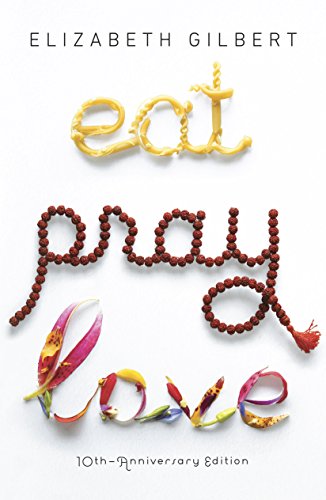
Review: Eat, Pray, Love by Elizabeth Gilbert


A few months back I had a sudden urge to read Eat, Pray, Love. I found a used copy on BetterWorldBooks.com and after I finished Goodbye To All That (the catalyst for this otherwise inexplicable urge; Elizabeth Gilbert had an essay in Never Can Say Goodbye, the companion compilation), I dug in slowly.

We meet Gilbert going through a harrowing divorce and the painful deterioration of her post-divorce love affair. I was wary, not prepared to read 300+ pages of a woman complaining, but instead I was pleasantly surprised with how much I enjoyed her story. The first section is disproportionately weighed down with grief in comparison with the rest of the memoir, but once Gilbert arrived in Italy, I found myself occasionally laughing out loud, and, shock of shocks, relating to her.

My relation was not to her grief or her misery, no, it was with the absolute bliss she was looking for and managed to find in Italy. Having traveled there last year, I remembered my own bliss, and could visualize some of the places she visited and the winding, cobblestoned streets she wandered. And the food, oh the food. Salivating while reading was another new sensation for me. My favorite part from this section (in the entire story, actually) was from Gilbert and her Swedish friend’s trip to Naples:

“So Sofie and I have come to Pizzeria da Michele, and these pies we have just ordered – one for each of us – are making us lose our minds. I love my pizza so much, in fact, that I have come to believe in my delirium that my pizza might actually love me, in return. I am having a relationship with this pizza, almost an affair. Meanwhile, Sofie is practically in tears over hers, she’s having a metaphysical crisis about it, she’s begging me, “Why do they even bother trying to make pizza in Stockholm? Why do we even bother eating food at all in Stockholm?”

When she arrived in India, I was again hesitant because I typically avoid talk of religion, and here was Gilbert about to live in a remote ashram for four months, praying, meditating, and chanting daily in an effort to become closer to God. That said, I was again surprised how much I was enjoying her journey. This particular section, while heavy in spirituality, is also heavy in character development. There was notable growth in both maturity and consciousness. Gilbert effectively broke herself down, all the way to her core, waded through her grief, and was finally in possession of the tools to build herself back up.

“Whenever something happens, I always react. But here I was – disregarding the reflex. I was doing something I’d never done before. A small thing, granted, but how often do I get to say that? And what will I be able to do tomorrow that I cannot yet do today?”

When Gilbert arrives in Bali, she, for the first time during her journey, has no set plans but to find the medicine man – Ketut Liyer – whom she met two years prior during an assignment, and to learn everything she can from him. She has nowhere to live, she’s not allowed to stay in Bali for more than a month, she does not remember where to find her medicine man other than he lives somewhere in Ubud, but somehow everything serendipitously falls into place. I won’t give away the ending, but so much happens during her four months in Bali, including even more personal growth.

I have not seen the movie adaptation starring Julia Roberts, but I now understand why so many women clamored to see the film and what inspired many to embark on their own journeys of enlightenment.

- Chelsea

More But I'd Rather Be Reading! here.

Wednesday, April 3, 2019

Review: Ancestral Night by Elizabeth Bear


I sustain myself on a diet rich in science fiction, and the genre is vast and much more varied than it is given credit for by people who consider it too nuanced for their taste, so you will perhaps forgive me if I say what I have to say about this book before I say why: This may very well be a modern classic.

Elizabeth Bear is a powerful voice in the realm of novels, having written more than a couple dozen thrilling and sage-worthy books with uncommon and uncanny main characters and worlds that are at once familiar and still entirely other. (Most recently, I've been impressed by her Karen Memory Adventures.)

Ancestral Night is itself a chase novel, a format classically built to entertain and keep the story as well as the audience focused as settings whiz by and characters sprint in and out, or else match stride with our heroes and villains, and it's a thrilling story! Set sometime-in-the-future, mankind has taken its place in the stars with other sentient races in a complex but seemingly generous collective (the Senarche) that permits the closest approximate to individual freedoms while maintaining necessary social responsibilities met or exceeded. Our narrator is one Haimey Dz, an engineer aboard a tugboat spaceship with a genetically-engineered-to-be-hot ace pilot named Connla and a lovable AI called Singer. They salvage space scraps for fuel, food, and money, far from the central seat of the Senarche, but close enough that they can still rely upon it for protection as well as purpose. One day, Haimey and her fellow crew score a salvage that is more dangerous than it even initially appeared! Now Haimey has an ancient alien parasite embedded in her arm and there's pirates after her and oh, hey, they did not even get the salvage they needed for food and fuel but there are pirates after them now and they have no idea how they're going to extricate themselves from this situation and still make enough money to survive as they have been. But nothing is as simple as it seems, and Haimey and friends soon find themselves swept up in the plottings of a mad rad pirate queen that will shake out everything Haimey has ever known to be who she is and, yeah, may or may not call into question the fate of the galaxy! 

Without saying too much about the plot of the novel, Ancestral Night does a brilliant job of narrating what would otherwise be a sprawling epic simultaneously verbose and void of character development as archetype and memes that consume the story for cheap emotional thrills and superficial attachments to immediate characters. There is a lot of heart in this novel, and my twitter feed is drowning in quotes I could not help but, perhaps, quixotically overshare. But you would too! Reading lines such as
  • We think of forgiveness as a thing. An incident. A choice. But forgiveness is a process. A series of choices we have to make over, and over, and over again.”
  • Do we have to call it something?” “It's like an ent,” I said.
  • Anyway, one of the first things you learn in space is not to thrash. If you have nothing constructive to do, the most constructive thing you can do is often nothing at all. In a mindful sense, I mean. Thrashing is the thing that gets people killed. Not sitting still.”
  • Epiphanies are wonderful. I'm really grateful that our brains do so much processing outside the line of sight of our consciousnesses. Can you imagine how downright boring thinking would be if you had to go through all that stuff line by line?”
  • Busywork, they used to call it. There's absolutely no value to it. Economic value, or personal. There's value in work you enjoy, or that serves a need. There's no value in work for its own sake. It's just . . . churn. Anxiety. Doing stuff to be doing stuff (...)”
really encourages sharing. And let's not forget that this is a science fiction novel, and a stellar one at that! Gravity is a theme here, as well as a plot element. There's enough theoretical physics as well as immediately-comprehensible science in this novel to keep this from being another escapist fiction work. I found myself setting aside this novel a number of times to parse through encyclopedic explanations of things like black holes, current hypotheses on dark matter, solid-state electronics, spacewalks, the effects of lack of gravity on muscle mass and bone density, and, truly, maybe a few dozen other maybe-random things that helped enrich my knowledge base as well as give me better context for the things Bear tells us through Haimey and the others. Heck, we're given a very thorough and alien depiction of a giant mantis extraterrestrial cop, and very real psychological responses to that alien's actions and behaviors and somehow, as a reader, the focus is still on what is happening next. Which is a super-cool feat in any book, let alone a science fiction novel. A lot happens in this book, and this hardcover first edition clocks in at almost 500 pages, but it is a delight to read and has more than most novels' share of laughs and shocks. 

Now, I said this novel is a modern classic in the science fiction genre, and I stand by that, but as anyone who has ever read Dune or Lord of the Rings or a Cosmere novel or Neverwhere, it is difficult to explain why. Sometimes, we come a cross a book that is both intelligent and generous in its affection for the reader as well as everything the writer wanted to say, and we pore through its pages, awed by the scale of its plot and breadth of characters (in this case, all of outer space, with cats and space dragons and ancient sentient reference centers inhabiting stars and weaponized gravity), and become aware that we are holding something truly timeless and wonderful. We realize this, and we push our minds and hearts further into the pages before us because knowing we may have a classic in our hands is special.

- Frank

More But I'd Rather Be Reading! here.